NVIDIA GTC 2026: 'Vera Rubin' architecture hints at a frightening future
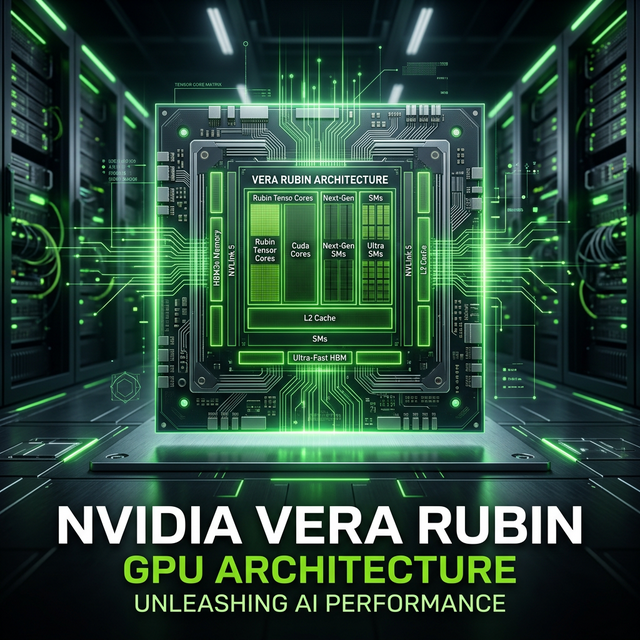
Yesterday morning, I was thrilled while watching the GTC 2026 keynote held at the SAP Center in San Jose live. CEO Jensen Huang is now making a clear declaration. “Nvidia is no longer a company that sells chips. It is a company that creates an operating system for a new industry called artificial intelligence.”
Let's take a look at the most shocking parts of this event and the changes that will directly affect our lives. Beyond simply listing technical specifications, this is an analysis of why this change changes the ‘default values of the Earth.’
1. ‘Vera Rubin’ architecture, inherited from the legendary name
This architecture, named after Vera Rubin, the astronomer who discovered the existence of dark matter, instantly made its predecessor, Blackwell, obsolete. In fact, even when Blackwell announced, I wondered “could it be faster than this?”, but Nvidia took another leap forward, as if laughing at the limitations.
The key is the phenomenal improvement in ‘performance-to-power ratio’. Computing efficiency has been increased four times compared to before, but this is not just “faster.” Currently, data centers around the world are lowering their AI specifications not because of a lack of technology, but because of a ‘lack of electricity.’ Vera Rubin is a magical tool that will solve this power bottleneck.
In particular, this time it is not the GPU alone, but the in-house designed Vera CPU combined with next-generation interconnect technology, making the entire system work like one giant brain. Now, we have entered an era where 'how quickly this system produces intelligence' rather than 'how much a chip costs' determines a company's profitability.
2. ‘Physical AI’: Robots learn the physical laws of reality
The fact that more than half of this keynote was devoted to robotics is significant. Jensen Huang emphasized that “the completion of intelligence lies not in text but in physical interaction,” and showed the evolution of the Isaac robotics platform.
The humanoid robots that appeared on stage were not machines that simply repeated input movements. I had learned about ‘gravity’ and ‘friction force’ on my own through millions of virtual simulations. Now, robots flexibly assemble parts even in the messy environment of the factory and flexibly respond to unexpected human behavior.
2026 will be the first year of ‘Physical AI’ in name and reality. Not only Tesla's Optimus, but also numerous robot startups around the world will operate on NVIDIA's platform, which will soon lead to a change in the social paradigm of 'infinite supply of labor.'
3. Status of Korean semiconductors: HBM4 is a necessity, not an option
What caught my eye when I saw the Rubin chipset in person was the amount of memory installed. HBM4 (High Bandwidth Memory 4th Generation) is now not a matter of choice, but of survival.
This is why Samsung Electronics and SK Hynix carried out a life-or-death marketing campaign right next to the NVIDIA booth during this event. For every set of Rubin architecture sold, tens of thousands of Korean-made memories are included. But it's not something you just enjoy. As NVIDIA's monopoly system becomes more solid, there are concerns that the leadership in memory unit prices could be taken over by them. We must now go beyond component suppliers and establish ourselves as co-designers of intelligent hardware.
4. Implication: $1,000,000,000,000 Opportunity
NVIDIA expects AI infrastructure sales to exceed $1 trillion by 2027. It is the fastest industrial expansion in human history. It is time to decide whether we will simply remain spectators in this huge flow, or whether we will borrow this computing power to create our own huge service.
Conclusion: The world seen from the shoulders of giants
This huge highway laid by Nvidia will be an opportunity for some and a threat for others. But what is certain is that we have now crossed a river of no return. We will continue to watch with suspense to see how the ‘abundance of intelligence’ that Vera Rubin will bring will change our daily lives, and what practical benefits we should take care of in the process.
While watching today's keynote, Jensen Huang's words, 'The more you buy, the more you save' came to mind once again. Perhaps this is a survival strategy that applies not only to large corporations, but also to all of us facing change. In an era where intelligence is becoming cheaper, the key is who will seize that opportunity first.