Battle for supremacy in video creation AI: Open AI Sora vs. Google Veo & Lumiere
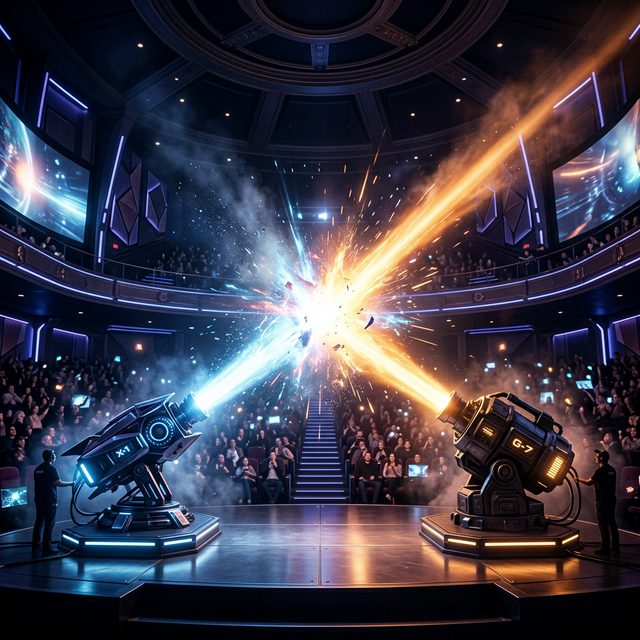
After the emergence of text-based video creation technology in 2024, the video AI market as of 2026 has gone beyond 'simple creation' and entered competition for 'implementation of sophisticated physical laws' and 'reflection of creator's intention (control)'. In particular, OpenAI's Sora and Google's Veo and Lumiere architectures, which are completely changing the landscape of YouTube, the film industry, and the advertising market, each have distinct technological advantages and are opening up new creative horizons for creators.
1. Synonym for physical consistency: Open AI Sora 2nd generation
Sora has established itself as the standard for cinematic video production through its second-generation model, which significantly improves on the hallucinations of the initial version.
- Strengths: Highly realistic depiction of complex physical interactions in the real world (liquid flow, light reflection, collisions, etc.). It also receives the highest score in the '3D space understanding index', in which the consistency of the subject shape and background does not break even when the camera moves (panning, zooming).
- Practical use: Scenes requiring high-budget drone filming or large-scale special effects (VFX) can be replaced with prompts alone, dramatically lowering production costs.
2. Google's counterattack: Veo and Lumiere
Google is responding through 'Veo', a next-generation model learned based on massive data from search engines and YouTube, and 'Lumière', a unique spatiotemporal architecture.
- Features of Veo: It has an excellent ability to create high-definition (4K or more) videos longer than 1 minute, and has excellent lip-sync precision that perfectly matches the shape of the mouth and voice when a speaker appears in the video.
- Characteristics of Lumiere: It has excellent ability to create inpainting, which modifies only specific parts of a video, or cinemagraph, which adds movement to only specific areas of a still image, maximizing the efficiency of short-form marketing and advertising editing.
3. Comparative analysis points for creators
Wisdom is needed to select the optimal AI tool according to the production purpose.
| Comparison Items | Open AI Sora | Google Veo / Lumiere | | :--- | :--- | :--- | | Key Features | Cinematic camera movement and implementation of physical laws | Sophisticated editing features and video consistency | | Recommended Use | Source for movie trailers, scenery and documentaries | Short-form advertisement, SNS intro, lip-sync-based educational video | | Maximum Resolution | 1080p~4K (varies by model) | 4K 60fps bandwidth support | | Control Precision | Prompt-based autonomous generation strengths | Partial editing and style transfer advantages |
Conclusion: What is more important than technical perfection is ‘depth of planning’
As video creation AI technology is upgraded, the value of 'directing' ability to convey a certain message and with what sense will increase, rather than differences in production tools. In order to survive the content competition in 2026, the key is to clearly understand the characteristics of each AI tool and preoccupy the workflow that allows you to visualize your ideas most effectively.
#Video AI comparison #Sora #Veo #Lumiere #AI content production #Video editing automation #Generative AI trend #4K video creation #Digital creative #2026 content outlook #AI video production guide