AI creation copyright? If you don't know this, the company will close. Real standards for commercial use
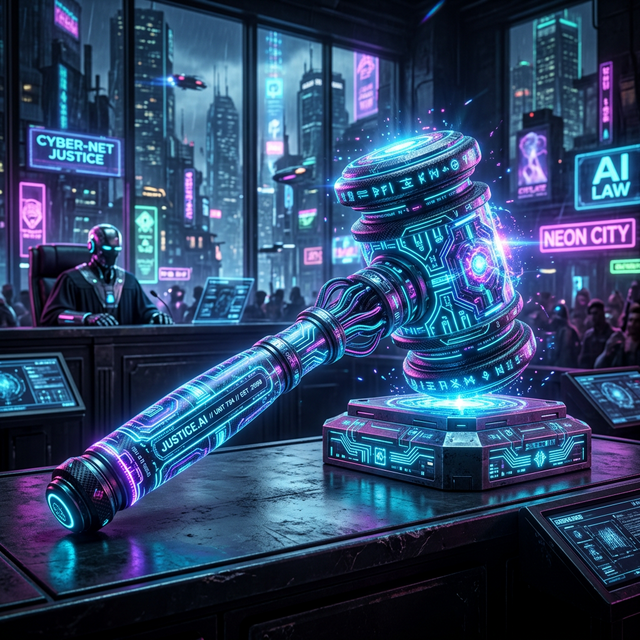
Whose painting is it that was drawn by artificial intelligence? Throughout the process of content innovation, I have witnessed numerous cases of IT-based 'copyright disputes.' From the Soribada incident of the MP3 era to the current AI revolution, technology has always outpaced the law, and in the midst of this, those who acted clumsily always received bills for hefty settlements.
Recently, one of my acquaintances also used images selected via Midjourney on a shopping mall product detail page without any modifications, but after being contacted by a law firm regarding the 'similarity' of the original source, they ended up losing 5 million won.
Today, I am not simply summarizing the laws. As of 2026, I am leaving you with practical killer strategies to make AI your own while protecting your business.
📋 Key Table of Contents for Avoiding Legal Minefields
- 'Generation' is done by AI, but 'copyright' can only be held by humans
- Avoiding 'Boomerang' Risk for Commercial Use
- 3-Step Survival Guide for Practitioners in 2026
- ❓ FAQ: Most frequently asked practical questions about AI copyright
- 🏁 Wrap-up: The skill appreciation is over. Now, put up a shield.
1. AI creates, but only humans can possess 'copyright'
This is an unchanging fundamental principle of global copyright law as of 2026. Both the U.S. Copyright Office (USCO) and the Korean Copyright Commission maintain the position that "AI-exclusive products without human creative contribution are not subject to copyright protection."
What is the problem?: The logic is that anyone can produce the exact same result by simply inputting a single sentence into a prompt. Even if someone else steals my AI image without permission, it is very difficult to legally claim that "my copyright has been infringed." Practical Tip for Securing Your Rights: Think of AI output as 'raw material' rather than a 'finished product'. Add brushstrokes to the picture drawn by AI, change the layout in Photoshop, or mix at least 30% of your own unique insights into the text written by AI. The law protects you only when there is evidence that a human manually intervened in the 'selection and arrangement'.
2. Avoiding 'Boomerang' Risk for Commercial Use
AI models have learned from a vast amount of other people's data. In this process, they may unintentionally infringe upon others' brands or characters.
Publicity Rights: If you use an image produced with the request "Draw it in Iron Man style" in an advertisement, you will face Marvel's legal team. Never use results that directly evoke the face of a specific celebrity, a registered character, or a brand logo for business purposes. Mandatory AI Labeling: Starting in 2026, YouTube and Instagram are mandating that photorealistic AI content be labeled as "AI-generated." Failure to comply may result in severe penalties, including restricted exposure and suspension of monetization. Honesty is safety.
⚖️ Practical AI Copyright Verification Workflow (Systematic Logic)
I am sharing the 'technical filtering process' used when hedging copyright risk in actual large-scale projects.
mermaid graph TD A [Secure AI product] --> B {Include brand/character in prompt?} B -- Yes --> C[Not for commercial use (Dispose immediately)] B -- No --> D{Run Similarity Check (Google Lens/TinEye)} D -- Similarity 70% or higher --> E [Design modification/change needed] D -- Similarity 30% or less --> F{Add human contribution of 30% or more} F -- No --> G[Difficulty in securing copyright] F -- Yes --> H[Final Commercial Use Available (Archive)]
Please adhere to this algorithm. Running the generated results through reverse image search tools such as **Google Lens** or **TinEye** is the beginning of 'technical defense'.

---

## 3. 3-Step Survival Guide for Practitioners in 2026

These are the practical guidelines I use in the field to avoid legal risks of tens of millions of won.

1. **Paid plans are a 'shield,' not a receipt**: Whether it is ChatGPT or MidJourney, the commercial terms of use for the free and paid versions are worlds apart. For business use, be sure to make a paid payment and keep **proof of license**.
2. **Be sure to record the work process**: You need to develop the habit of keeping a work log detailing which prompts were used and what manual work was performed after the final result. This serves as the sole evidence proving you are the 'creator' in the event of a future dispute.
3. **Utilize transparent models**: Using models trained exclusively on data with resolved copyright issues, such as Adobe Firefly, is the wisest strategy for companies.

---

## ❓ FAQ: The Most Frequently Asked Practical Questions About AI Copyright

**Q1. Is it possible to register a trademark using an AI-generated image as a logo?**
A: It is not possible for simple products. However, if significant human modification has been involved, you can attempt to register it as a trademark under the name 'derivative work.' Be sure to consult with a professional patent attorney.

**Q2. If I edit a text written by AI slightly and publish it as a book, will I incur copyright?**
A: Yes, if you fill 30 to 50 percent or more of the entire content with your own insights and sentences, there is a very high probability that it will be recognized as a copyrighted work. However, merely changing vocabulary at the level of 'paraphrasing' is risky.

**Q3. If someone steals my AI prompt and generates the exact same image, is punishment possible?**
A: Unfortunately, since 'prompts' themselves fall into the realm of ideas, it is difficult to obtain copyright protection. The only solution is to refine the result to create your own unique artwork.

---

## 🏁 Wrapping up: The skill appreciation is over. Now, put up a shield.

Artificial intelligence is a blessing, but copyright is a thorny rose. Do not hide behind AI; use AI as a tool to bring your creativity to the forefront.

Stop wasting time fearing that you might infringe on the rights of others. Know the regulations precisely and build your business solidly. Success goes only to those who understand the practical aspects.

#AICopyright #CommercialAI #2026TechGuide #IntellectualPropertyRights #ContentCommercialization #RevenueBlogging #UtilizingMidJourney #LegalRiskManagement